 Facts of the Case:
In this case, the petitioner challenged an order whereby the petitioner’s application seeking rectification of an order-in-original had been rejected. The petitioner contended that the rectification application pointed out errors apparent on the face of the record, including a crucial mismatch between the tax determined in the summary order issued in Form DRC-07 and the detailed order-in-original, resulting in inconsistent quantification of tax demand. According to the petitioner, such mismatch directly impacted its ability to accurately compute the statutory pre-deposit required for filing an appeal, thereby giving rise to adverse civil consequences. The Petitioner submitted that they have specifically requested an opportunity of personal hearing in the rectification proceedings. However, the authority rejected the application without granting a hearing or providing any reasoning. Reliance placed upon decision of the Madras High Court in Aries Interior v. State Tax Officer, contending that even at the rectification stage a hearing is required when the applicant seeks rectification.
The respondent GST authority opposed the petition, arguing that under the third proviso to Section 161 of the CGST Act, principles of natural justice are mandated only when rectification adversely affects any person, and since no rectification had been made, no such hearing was required.
Issue:
Whether, while rejecting an application for rectification under Section 161 of the CGST Act, the GST authority is required to afford an opportunity of hearing to the applicant, particularly where the rejection may have civil consequences.
Held that:
The Court examined the third proviso to Section 161, which mandates observance of natural justice where the rectification itself adversely affects any person. However, the Court clarified that this provision does not impliedly prohibit observance of natural justice in other situations. Instead, the proper test is whether the proposed action or order has civil consequences for the affected person. In the present case, the mismatch in the quantification of tax liability between the summary and detailed orders had a direct bearing on the determination of the mandatory 10% pre-deposit required for filing an appeal. This inability to ascertain the correct amount deprived the petitioner of an effective statutory remedy, clearly constituting a civil consequence. Therefore, the authority was required to afford a hearing before deciding the rectification application.
The Court relied on the Madras High Court decision in Aries Interior, which held that even though the third proviso to Section 161 applies to suo motu rectification involving enhancement, it does not negate the right to a personal hearing when a party itself files a rectification application.
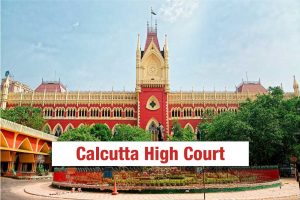
The Calcutta High Court held that the rejection of the petitioner’s rectification application without affording an opportunity of hearing was contrary to the principles of natural justice and therefore unsustainable. Accordingly, the impugned order was set aside, and the matter was remanded to reconsider the rectification application afresh, after granting the petitioner a personal hearing, and to pass a reasoned order.
Case Name: JCI Chemicals India Pvt. Ltd. Versus The State of West Bengal & Ors. dated 24.11.2025
To read the complete judgement 2025 Taxo.online 3056