29.09.2026: Government brainstorming phased cash refunds on tax paid for machinery, capital goods
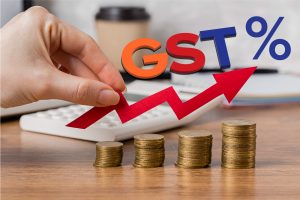 The GST Council is likely to consider easing input tax credit rules for GST taxpayers at its October 7 meeting, while the government is also examining a broader reform that would allow phased cash refunds of tax paid on machinery and other capital goods, government sources said.
The move could free up cash tied up in businesses in solar and renewable energy equipment, electric vehicle manufacturing, food processing and textiles, where machinery makes up a large part of initial investment. Any such relief is likely to come in stages, the people said, asking to remain anonymous.
Under the current system, businesses can claim GST paid on machinery as input tax credit but can only use it to offset the tax they collect from customers. Companies setting up factories, or those selling products taxed at lower rates than their inputs, can therefore be left with unused tax credits for months or even years.
Cash refunds are allowed only in limited cases, mainly exports and where inputs are taxed higher than the final product. Even in the second case, the refund formula covers tax paid on raw materials and services, but not on machinery and other capital goods.
“It is in the works, and discussions are ongoing. There is a lot of brainstorming taking place, but a lot of data still needs to be collected. Any reform has to be backed by data and its implications have to be worked out. It also has to be agreed upon by the states,” a senior government source told Moneycontrol.
The Council’s October 7 meeting is expected to focus on process reforms. It is likely to adopt an automated, risk-based system for input tax credit (ITC) refunds, as Moneycontrol reported earlier. Under it, about 90 percent of refund claims would be processed through a faceless, technology-led system. The system would use each taxpayer’s risk profile to release low-risk claims faster, instead of waiting for an officer to assess them.
The Council is meeting for the first time in over a year. Its last meeting, in September 2025, focused on rates, and it cut GST on many items, mostly from 12 per cent to 5 per cent and, in some cases, to nil.
The cuts were meant to lower the tax burden on consumers. But in some sectors, they left businesses paying a higher GST rate on inputs than on finished products, a situation known as an inverted duty structure.
In such cases, credit piles up because the tax paid on inputs is more than the tax payable on the product. Under the current mechanism, the refund is calculated only on eligible input goods. Credit on capital goods and input services is left out, which keeps part of the accumulated credit locked in the system. Any change to the scope of the refund would need the Council’s approval, the source added.
Machinery and services under review
Industry has long wanted to either use its accumulated tax credit more freely or get it refunded in cash. Refunds on tax paid for machinery are among the options being examined, the government source said.
“The issue is that a significant amount of working capital can get stuck when input tax credit accumulates, particularly in sectors where there is substantial investment in capital goods. This is still under discussion,” the official said.
The treatment of input services such as transport, rent and professional fees, under the inverted duty structure is also being examined. The current refund formula covers only goods, and extending it to services would have larger revenue and compliance implications, the official said.
Revenue may be the sticking point
Tax revenue is shared between the Centre and the states, so a cash refund on capital goods would hit both. Estimates of the possible loss are being prepared. For instance, a manufacturer buys machinery worth Rs 10 crore and pays 18 percent GST, or Rs 1.8 crore. Today, it can use that credit only to offset the GST it collects on its own sales, so a company with little output in its early years may wait a long time to use it, and no cash comes back. If the Council approves the change, the company could claim a part of that Rs 1.8 crore in cash, in stages.
“There are figures being worked out on the possible revenue implications. These numbers have to be backed by proper analysis and rechecked before any proposal can be taken to the Council,” the official said.
Source: Money Control