
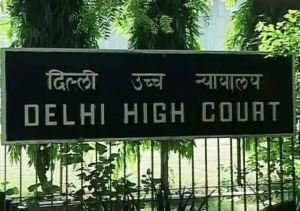
02.05.2026: Bar under Section 6(2)(b) is limited, applicable only where proceedings relate to the same subject matter and not merely because they involve the same assessee: Delhi High Court
 Facts of the Case:
In this case, the petitioner was subjected to two separate proceedings under GST law by different authorities. Firstly, proceedings were initiated by the State GST authorities under Section 73 of the relevant State GST Act for the Financial Year (FY) 2019–2020, alleging incorrect declaration of tax liability and excess availment of Input Tax Credit (ITC). These proceedings culminated in confirmation of demand against the petitioner.
Subsequently, the Central GST authorities issued a separate show cause notice under Section 74 of the CGST Act for FY 2018–2019. In this proceeding, the allegation was materially different, namely wrongful availment of ITC based on invoices issued by a non-existent firm, thereby invoking fraud-related provisions. This demand was also confirmed by the adjudicating authority.
Aggrieved by the second proceeding, the petitioner approached the High Court contending that initiation of proceedings under Section 74 for FY 2018–2019 was barred by Section 6(2)(b) of the CGST Act, as proceedings had already been initiated and concluded by State authorities, thereby constituting impermissible parallel proceedings.
Issue:
Whether Section 6(2)(b) of the CGST Act bars initiation of proceedings by Central GST authorities when proceedings have already been undertaken by State GST authorities, even if such proceedings relate to different financial years and distinct allegations.
Held That:
The Court clarified that the bar contained in Section 6(2)(b) is not absolute and applies only when the proceedings by Central and State authorities relate to the same subject matter.
The Court interpreted “same subject matter” to mean proceedings that relate to the same tax liability, arise from the same set of facts, involve the same contravention or infraction, and pertains to the same assessment period.
On examining the facts, the Court found that there was no overlap between the two proceedings. The earlier proceedings under Section 73 pertained to FY 2019–2020, whereas the impugned proceedings under Section 74 related to FY 2018–2019. Thus, the assessment periods were distinct.
Further, the Court emphasized the qualitative difference between proceedings under Section 73 and Section 74. While Section 73 deals with cases not involving fraud, wilful misstatement, or suppression of facts, Section 74 specifically addresses cases involving such elements. Therefore, the nature and gravity of allegations in both proceedings were fundamentally different.
In light of these distinctions, the Court held that the statutory bar under Section 6(2)(b) was not attracted, as the proceedings were neither duplicative nor overlapping in subject matter. Accordingly, the writ petition was dismissed.
Case Name: Ramada Engineering Industry v. Additional Commissioner (Adjudication) dated 23.04.2026
To read the complete judgement 2026 Taxo.online 1047