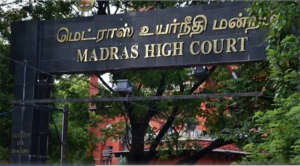
31.03.2026: Where the tax liability is admitted and substantially paid, imposition of penalty under Section 73 of the GST Act is not justified and requires proper reconsideration: Madras High Court
 Facts of the case:
In this case, the petitioner challenged the impugned order dated 13.03.2025, which was passed by the respondent pursuant to an earlier remand order of the High Court dated 16.08.2024 in connected writ petitions. In the earlier round, the Court had set aside the original assessment orders and directed the respondent to pass fresh orders subject to the petitioner depositing 10% of the disputed tax. In compliance, the petitioner deposited ₹2,88,181/- on 21.11.2024 and had also made an earlier payment of ₹77,201/- on 16.10.2024. However, in the fresh impugned order, while determining tax liability arising from discrepancies such as mismatch between GSTR-1 and GSTR-3B, under-reporting of turnover, and non-payment on certain income heads, the respondent authority failed to properly account for these payments. Although the order recorded that an excess amount of ₹1,73,365/- had been paid by the petitioner, it still proceeded to levy interest under Section 50(1) and impose penalty under Section 73 of the GST Act, 2017.
The petitioner contended that the excess amount ought to have been adjusted towards interest and penalty and that the computation in the impugned order was erroneous.
Issue: Whether the respondent authority was justified in imposing penalty under Section 73 of the GST Act, 2017, and whether the computation of interest and adjustment of excess tax payment had been correctly carried out.
Held that:
The Court held that, in the facts and circumstances of the case, there was no justification for imposition of penalty under Section 73 of the GST Act, particularly when the liability to tax had been admitted by the petitioner. However, the Court clarified that the petitioner was liable to pay interest under Section 50(1) on account of delayed payment of tax.
At the same time, the Court found that there were discrepancies and doubts regarding the calculation of interest as reflected in the impugned order and that the excess payment of ₹1,73,365/- made by the petitioner had not been properly adjusted.
Accordingly, the Court set aside the impugned order to the limited extent and remitted the matter back to the respondent authority with a direction to recompute the correct amount of interest payable after adjusting the excess amount already paid by the petitioner.
The authority was directed to raise a fresh demand only for the balance amount, if any, after such adjustment. Insofar as the penalty was concerned, the Court granted liberty to the petitioner to submit a proper representation before the authority for reconsideration. The writ petition was thus disposed of with directions for fresh adjudication limited to recomputation and adjustment.
Case Name: Tvl. Sai Cashew Processors Rep. by its Proprietor Mr. M. Karthick Gupta S/o. Mr/Muthukumar Versus The Deputy State Tax Officer, Cuddalore dated 11.03.2026
To read the complete judgement 2026 Taxo.online 708